
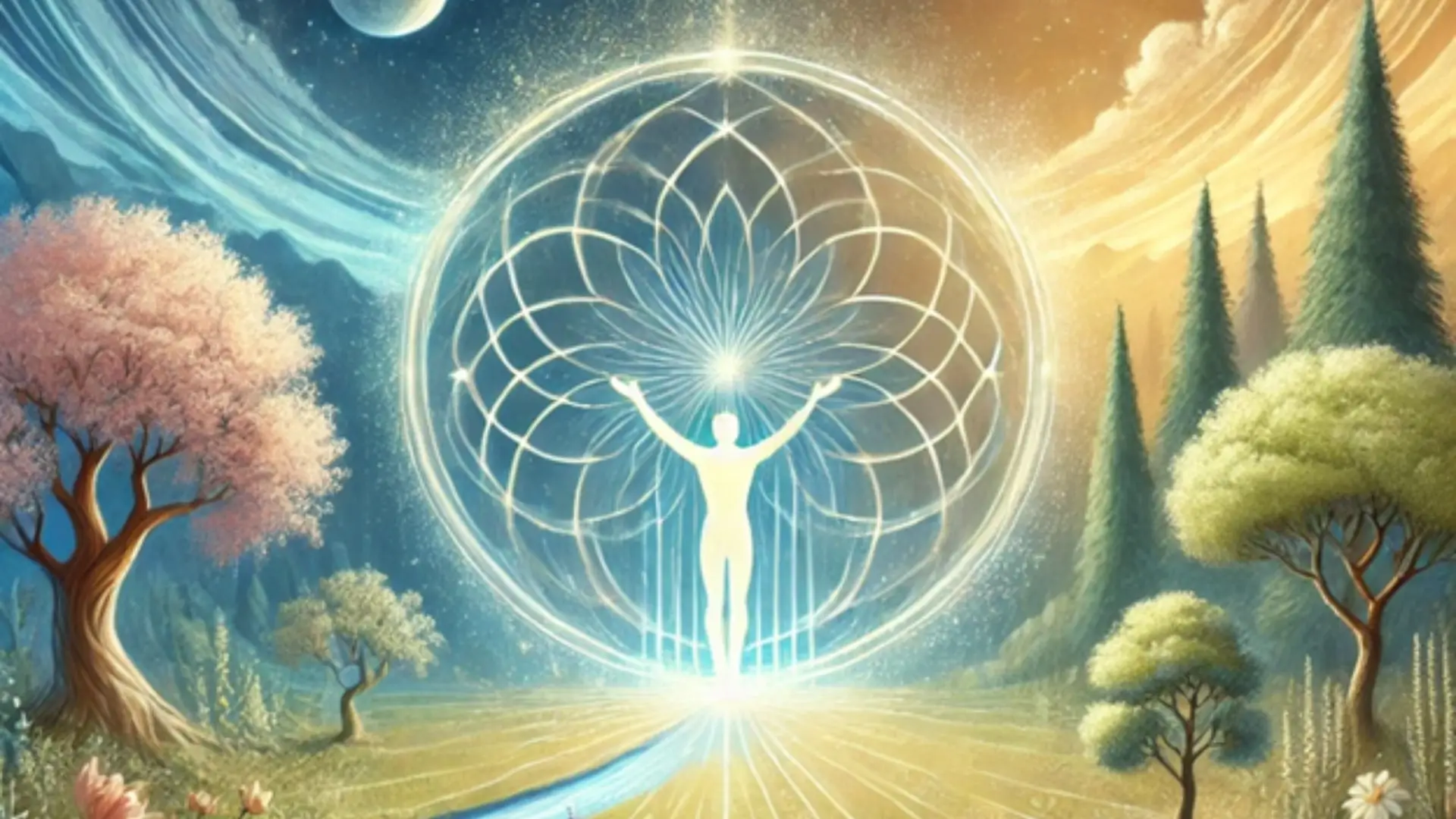
In times of crisis and inner turmoil, many individuals rely on their spiritual beliefs and practices for emotional support. Although this may raise skepticism for some, science shows that spirituality can benefit the mind and body, reinforce inner peace, and promote personal development.
According to Abraham Verghese, spirituality “involves how people fulfill what they hold to be the purpose of their lives, a search for the meaning of life and a sense of connectedness to the universe (…) At the same time, spirituality is very much personal and unique to each person.”
Religion, on the other hand, is “institutionalized spirituality.” In this sense, one can be spiritual (practicing spiritual principles or maintaining spiritual beliefs) without being religious (belonging to an organized institution based on spiritual beliefs).
Nowadays, many consider themselves spiritual and affirm that spirituality helps them to cope with stress and negativity. In today’s fast-paced world, most people are battling stress, depression, and anxiety, and mental health is more relevant than ever.
Spirituality can help address many of these problems, or at least provide solace to those struggling with mental health, promote inner peace, and bring meaning to life.
This article explores the relationship between mental health and spirituality, the possible benefits, and how to incorporate them into daily life and therapeutic settings.
The Connection Between Spirituality and Mental Health
Numerous studies have analyzed the relationship between spirituality and mental health. Interestingly, it can have an outstanding impact on mental health problems and mental well-being. Here are some examples of these findings.
Spirituality can lower depression.
Research consistently shows that spirituality has a significant effect in improving depressive symptoms. In a study including individuals diagnosed with depression, those with higher levels of spirituality had lower levels of depression. Also, those who engaged more often in spiritual practices (like meditation, prayer, or participating in a spiritual community) recovered from depression 50% faster.
Spirituality can ease anxiety.
Most studies show that spiritual practices reduce anxiety, especially when the individual is deeply involved. The results of these studies suggest that spiritual involvement eases anxiety more than just spiritual beliefs. In other words, what makes a difference in anxiety levels is not just believing in spiritual forces or considering oneself spiritual but also actively participating in spiritual practices regularly.
Spirituality reduces suicide rates.
The book Handbook of Religion and Health includes studies indicating that religion and spirituality are associated with a lower risk of suicide. Further, a large study on women showed that those frequently attending religious services were five times less likely to commit suicide than those who never attended religious services.
Spirituality as a Tool for Personal Growth
Spirituality can be a catalyst for personal growth in many ways.
Spirituality fosters self-awareness and introspection.
Many spiritual practices, like meditation, mindfulness, prayer, or contemplation, help individuals connect with themselves.
By engaging in these practices, people can create a space to explore their inner world, which is fertile ground for reflection. This way, they can observe their emotions, thoughts, and behaviors without judgment.
This experience has many positive effects. It fosters inner peace and relaxation, which helps to cope with stress. It also allows people to observe their behaviors calmly, creating opportunities for growth and self-improvement.
Spirituality cultivates personal values.
Spiritual beliefs help shape one’s values and worldview. Most spiritual traditions promote love, compassion, kindness, charity, etc. Individuals with strong spiritual beliefs may feel a need to reflect and modify their behaviors according to their spiritual principles.
Spirituality helps to find purpose.
Individuals with a strong sense of spirituality may see their life as part of something greater than the self. Spirituality makes people question their purpose in this world and offers a sense of meaning. Although this spiritual quest can be confusing, it often gives many people a clearer purpose.
Spirituality invites individuals to find transcendence in their daily lives, develop a sense of mission, and discover ways to contribute positively to the world, helping them feel fulfilled.
This sense of purpose can also be a powerful source of motivation. Feeling connected to a larger plan can make you perceive obstacles as opportunities for growth.
Spirituality promotes emotional resilience.
Many spiritual beliefs hold that one should let go, surrender, and trust God, the Universe, or an unknown force. This idea can be comforting during hardship and allows people to cope with life’s challenges. Practicing forgiveness can also help release pent-up emotions and balance your emotional well-being.
Spirituality encourages personal healing.
Spirituality often emphasizes healing, which can mean the release of trauma, pent-up emotions, or distress. By prioritizing healing and practicing self-awareness and forgiveness, individuals can release past pain that hinders personal growth and move on, building resilience.
Spirituality promotes mindfulness
Spiritual philosophies and practices like meditation or contemplation invite people to be present in the moment, rather than dwelling on the past or worrying about the future. For instance, Thich Nhat Hanh, the famous Buddhist monk and mindfulness teacher, said: “Life is available only in the present moment.” Practicing mindfulness can improve attention and focus, foster gratitude, and bring a sense of appreciation for life.
Spirituality fosters community
Although not all spiritual individuals participate in spiritual groups, many find strong support in their religious community or informal spiritual group.
Social connections are very important for happiness, fulfillment, and a sense of belonging. A Harvard study showed that embracing community and close relationships promotes longevity and happiness. Also, participating in a spiritual group can foster a sense of shared purpose, which supports motivation and personal development.

How Do I Incorporate Spiritual Practices?
Spirituality cannot be limited to a specific set of practices. However, many practices and habits considered spiritual can benefit mental health.
Mindfulness and meditation
Mindfulness and meditation are ancient techniques. Meditation is the practice of contemplating thoughts and emotions by relaxing the body, quieting the mind, and training awareness to achieve a calm state of mind or even higher states of consciousness. Mindfulness, on the other hand, helps bring awareness to the present moment.
Meditation doesn’t have to be complicated, and you can practice over time. Sit down comfortably, breathe deeply, and pay attention to your breath. If thoughts arise, acknowledge them, let them go, and bring your attention back to your breath.
You can incorporate mindfulness into your everyday routines. It simply means paying attention to your surroundings, yourself, and your actions.
Many studies support the benefits of mindfulness and meditation for mental health and reducing stress. By practicing meditation and mindfulness, you can foster a calm state of mind, improve your attention, and appreciate the small details of life.
Gratitude journaling
A gratitude journal can be beneficial. It helps people see life optimistically and focus on what they have instead of what they lack. It involves keeping a journal where you list three things you’re grateful for at the end of each day.
Connecting with nature
Research shows that spending time in nature can make us happier. It is an exceptionally relaxing experience that helps us cope with stress. But connecting with nature is more than just relaxing—it can be a spiritual experience.
Spending time in nature prompts us to be mindful of the present, enjoy the little things in life, and feel connected to a larger whole, Mother Earth.
There are many ways to connect with nature: visit natural places like forests, mountains, beaches, or rivers; practice mindful gardening; earthing (walking barefoot on soil); hug a tree; hike; or meditate surrounded by nature. Look for one that fits your needs and start practicing to reap the benefits.
Acts of service and compassion
Spirituality often emphasizes serving humankind, nurturing compassion, and helping those in need. As a spiritual experience, compassion and charity can help us to feel interconnected with all living beings as part of a larger whole. Also, it gives us a sense of purpose, motivating us to leave a positive mark on the world.
Research shows that volunteering and charitable donations positively affect mental health. Many people feel better about themselves after doing a good deed, also known as “helper’s high,” which is also associated with longevity and better health.
There are many ways to help others, not only by donating large amounts of money to charity. You can listen to someone who needs it, volunteer, or simply perform random acts of kindness like paying for a stranger’s meal.
What Are Some Misconceptions of Spirituality?
Historically, spirituality and religious beliefs have been connected to pathologies, considered symptoms of mental illness. For instance, Freud linked spirituality with neurosis. But in recent decades, there has been an increase in research, and most psychiatrists believe that spirituality and religion are important in their patients’ lives.
Although some misconceptions have been proven wrong, others still persist today. Here are some ways to overcome them.
#1 Misconception: Spirituality is unscientific
In a 2011 study, the researchers interviewed 275 scientists from the 21 top U.S. research universities about their views on spirituality. Surprisingly, most respondents considered themselves spiritual and believed that spirituality is congruent with science. The book The Tao of Physics by physicist Fritjof Capra explores this relationship, arguing that modern science and Eastern mysticism share major parallels.
In addition, extensive research on the relationship between spirituality and mental health shows that spiritual practices have scientific support. The positive effects of spiritual practices like meditation, mindfulness, earthing, prayer, etc., have been widely studied and documented in the last decades.
To overcome this common misconception, stay informed and remain open but critical. Being spiritual does not mean that you should unquestioningly accept any idea. Use discernment and reflection, and question what you read or hear, while allowing yourself to experience what spirituality means for you.

#2 Misconception: Spirituality is the same as religion
Many people feel skeptical because they have negative past experiences with organized religion or spiritual groups. Although there is nothing wrong with religion itself, some may feel uncomfortable about participating in a religious group.
Remember that spirituality is a personal journey. You don’t need to adhere to what others believe or do. Stick to what resonates with you so you can explore spirituality in a way that feels authentic.
Start by asking yourself what speaks to you about spirituality, like reading philosophical texts, meditating, spending time in nature, etc., and explore that aspect of spirituality. You can also write a journal to document your progress or your experience with spirituality.
#3 Misconception: Spirituality Requires Drastic Changes
Some may think spirituality means becoming a Buddhist monk, quitting your job, or giving up material possessions. You can start small by incorporating the spiritual practices that resonate with you in your daily routine. This also means you do not need to carve out much time or resources to practice spirituality.
For instance, you can wake up 5 minutes earlier and start the day with a short meditation. Instead of scrolling through social media in your free time, you can watch a free online lesson on Yoga for beginners. Instead of nervous eating, try mindful eating, etc.
#4 Misconception: Spirituality is About Escaping Reality
Practices like mindfulness and living in the present show us that spirituality is not about escaping reality but experiencing it more deeply. Spirituality provides practical tools to cope with life’s challenges while maintaining emotional balance. It shows us that we can face hardships with serenity, allowing us to see things more clearly.
Although some spiritual beliefs, like trusting God or the Universe and letting go, may seem irrational to some, they remind us that some things in life are beyond our control. The invitation is to focus on the circumstances one can control.
The famous Serenity Prayer reflects this idea:
“O God and Heavenly Father, grant to us the serenity of mind to accept that which cannot be changed, courage to change that which can be changed, and wisdom to know the one from the other through Jesus Christ, our Lord, Amen.”
This practice of surrendering helps to cope with stress and build resilience.
The Role of Professional Support
Most mental health professionals agree that clinicians should ask about a patient’s religion and spiritual beliefs, and how they want religion/spirituality to be involved in care. Studies show that most patients want their clinicians to ask about religion and spirituality. This can improve their trust in physicians and their treatment adherence, and bring therapeutic benefits.
Spiritual or religious beliefs cannot be simply labeled as good or bad since there is a complex interplay between them and mental health. Psychiatrists should respect, support, and encourage the patient’s spiritual practices and beliefs when they help them to cope or do not affect mental health negatively. On the other hand, it is suggested that they challenge religious views that can negatively affect mental health (like believing that God is harsh or punishing).
Clinicians can incorporate the patient’s spiritual beliefs into treatment in ways with proven positive effects. If the patient wants it, the clinician can refer them to specific community spiritual or religious resources to complement their treatment.
In other cases, the patient can receive spiritually integrated psychotherapy. This form of therapy emphasizes the patient’s worldview. For instance, there have been recent developments like specific versions of Cognitive Behavioral Therapy for Christianity, Buddhism, Hinduism, Islam, and Judaism.
If religion and spirituality are important to you, seek practitioners who respect your spiritual beliefs. It can have a very positive effect on your mental health and the therapeutic benefits of the treatment.
Building a Mindful and Spiritual Connection
Spirituality is deeply linked to mental health. Historically, spiritual groups were the first providers of mental health care. Now, with scientific developments and research, it is clear how spirituality can positively impact psychological well-being.
Many people mistakenly believe science and spirituality are mutually exclusive. However, the evidence shows they can coexist and even complement each other. By combining the best of both worlds, one can reap the mental health benefits, nurture authenticity, and foster personal growth.
About the Author

Chad Thompson, LCSW, is a Licensed Clinical Social Worker providing walk-and-talk therapy in Tampa, Florida, combining the benefits of movement with clinical practices. Telehealth services are also available across Florida, Idaho, Ohio, South Carolina, and Utah.
With a unique background in cinema studies and over a decade in hospitality, Chad brings a distinctive storytelling approach to therapy that helps clients see their struggles and growth through new perspectives. He also specializes in faith-based counseling that integrates mental health practices with your personal beliefs. Services also include anxiety therapy and faith deconstruction/transition counseling.
Contact us today to schedule a session and take the first step toward a more peaceful life.