

A Change in Faith
Sometimes, what begins as a private question about your faith can gradually influence all aspects of your life. It can affect how you understand yourself, relate to others, and doubt your place in your faith community.
When something that gives your life meaning or stability begins to feel uncertain, it’s normal to experience emotional discomfort before you fully understand why. You might feel relieved that you are finally allowing yourself to ask honest questions. But all too soon that relief may be replaced with self-doubt. Going back and forth can be exhausting, especially if the people around you expect certainty or want you to make a specific choice.
Faith transition anxiety describes the emotional weight that can come with questioning one’s beliefs. For some people, the process follows a painful experience in a religious setting. For others, it begins with a question that gradually becomes harder to ignore.
The Emotional Weight of Questioning Your Faith
Your faith may have provided a sense of order and direction for your life. Questioning your beliefs can make that structure feel less certain, causing anxiety before you’ve even started to sort through your feelings.
The intensity of this reaction can vary. If you feel supported by the people in your life, you may feel more comfortable exploring your questions openly. But if you anticipate criticism, you’re more likely to need more privacy and sort through questions on your own.
Fear does not have to become a deadline. You may feel pressured to make up your mind quickly, but real clarity rarely arrives on command. Permitting yourself to pause can make the process feel less overwhelming.
Why Does Uncertainty Feel So Uncomfortable?
Our minds naturally seek predictability because it makes us feel safe. So, when something you believed in is no longer secure, your stability can be shaken. Uncertainty can also cause physical symptoms. You might notice a tightness in your chest or have trouble sleeping.
And in today’s world of instant answers, you may think you can find a solution from a search engine. But even if you spend countless hours reading, there isn’t that one article that will settle everything. Seeking answers is understandable, but repeated searching can ‘teach’ your mind that you cannot sit with an unanswered question.
Try to separate having a question from needing to resolve it today. You can write the question down and return to it later. Stepping back for a while is not the same as avoiding the issue. It can give you the emotional space to return to it with a clearer mind.
Guilt and Shame During a Faith Transition
If you were taught that doubt is a moral failure rather than a normal part of human reflection, questioning your beliefs can trigger feelings of guilt. Part of you may understand that curiosity is not harmful. But your emotional side may still feel panicked or ashamed when you consider a different perspective.
This reaction does not necessarily indicate that these questions are right or wrong. You may be responding to expectations you learned long ago about what a ‘good’ person should believe.
It may help to listen for the message beneath the guilt. You may fear being judged for changing. Or you may fear losing the closeness of your family. Putting the fear into words won’t make it disappear, but it can make it easier to understand what is causing your anxiety. Instead of assuming guilt is the answer, you can recognize that you still have choices.
Identity Loss
If faith has been part of your daily life for years, changing beliefs can leave you feeling unsure of who you are. You may find yourself missing having a familiar answer when someone asks what matters to you. It can feel like you’ve become disconnected from an earlier version of yourself.
Remember, questioning does not invalidate your past. It just means your story is becoming more layered. Some of the values you believed in may still feel deeply true, like compassion and a desire for a life built around close connection.
Let this part unfold slowly. It is okay if you cannot explain every change yet.
The Fear of Rejection
The fear of rejection can make it hard to discuss private questions openly. If most of your family or friends share the same faith you are questioning, that can make it even more difficult. You may also rely on relatives for housing or even financial help.
Keeping your thoughts private for the time being may be a sensible form of self-protection.
Consider who in your life has shown they can listen without trying to control your choices. A supportive person may see things differently, but they will not use your openness against you.
Before sharing your feelings, decide what you need from the conversation. Do you just want to be heard? Or do you want reassurance that the relationship can continue? Communicating these ahead of time can help make you more comfortable in the conversation.
You may also feel more prepared when you know what topics you are not ready to discuss. You could say, “I am still sorting through this, and I am not ready to debate it.” If it seems like the conversation is becoming judgmental, you can end it: “I want to continue when we can both speak respectfully.”

Grief During a Faith Transition
Grief is a natural response to a faith transition because changing your beliefs involves genuine loss. You might miss the sense of being known within a community, along with the stability that came with clear beliefs. This sadness does not mean you made a mistake. Relief and grief can reside in the same heart without canceling each other out.
Familiar Rituals
Rituals can hold an emotional weight that can be hard to explain.
There might be days or celebrations in your faith that created a rhythm in your year. Missing these doesn’t mean you must go back. It is possible to build something through practices that fit your ‘new normal’, like journaling or regularly spending time with a trusted friend.
Moving at a Pace That Feels Manageable
You do not have to solve every question as soon as it appears. Give yourself time to reflect while refusing to treat anxious pressure as a deadline.
During a transition, it is easy to feel pulled toward extremes. There are pieces of your past that you want to keep, but there are also aspects that you need to examine with greater care. Allow yourself to sit with that complexity before deciding what comes next.
Finding Your Ground During Uncertainty
The practice of ‘grounding’ brings your attention back to the present moment. Simple activities like taking a walk may help you reset. Enjoying a cup of tea with someone you trust may offer comfort. Think about what helps center you, and pay attention to spaces that leave you ashamed or pressured. You can step away from content or situations that make your anxiety worse. A rested body is often better equipped to handle hard emotions, so prioritize steady meals and self-care that support a sense of stability.
Therapy That Respects Your Autonomy
A respectful therapist provides a space where your well-being is the priority. Their role is to help you navigate the heavy emotions—like persistent guilt or the habit of people-pleasing—without directing you toward a specific conclusion. They will respect your faith without trying to influence you. For many, therapy is the only place where uncertainty does not have to be defended or fixed.
You do not need to know if you are staying or leaving your faith community before seeking help. Therapy is a tool to help you navigate the “in-between.” The work should center your values and support choices that feel honest to you.
What Supportive Therapy Should Feel Like
Supportive therapy should feel collaborative and entirely free from pressure. A good therapist helps you explore how your environment affects your mental health without pushing a predetermined outcome.
During your first conversation, notice if you feel heard. You should be able to express doubt without it being treated as a problem. If you ever feel dismissed or pressured to “get back on track,” it is perfectly acceptable to look for someone else. A supportive provider should help you feel steadier in your own voice, not contribute to your doubt.
When Religious Trauma May Be Part of the Picture
Religious trauma can be part of the experience when harmful environments or fear-based teachings leave lasting emotional scars. This might look like controlling behavior from leadership or shaming messages that still linger in your mind.
Sharing these specific observations with a professional can help you find relief. Support should meet you where you are, even if you are still unsure how to describe your experience.
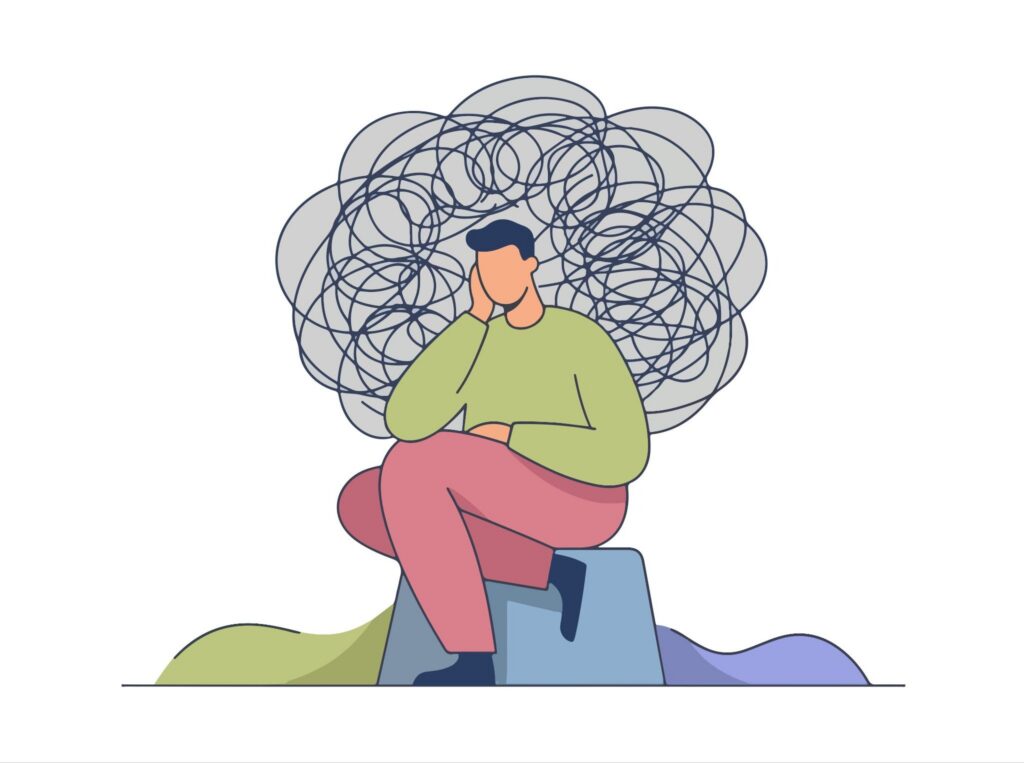
Knowing When to Ask for Support
Reaching out can be helpful when faith transition anxiety starts to affect daily life. Don’t wait until you are in a full-blown crisis. If worry feels persistent or you feel alone, it can help to talk about it.
Consider going to a therapist if your anxiety is disrupting your sleep or if it is making it hard to focus. Difficult family dynamics can make you feel more isolated if you do not feel safe sharing what you think.
Therapy cannot remove every difficult feeling connected to changing beliefs. It can, however, offer a space to understand what you feel and learn how to better care for yourself.
Finding a Good Therapist
Look for someone who speaks respectfully about personal values and independence. Their website should provide insight and explain their qualifications or how they approach treating anxiety and major life changes.
You can ask if they have experience working with people who are questioning religious beliefs. You might also ask what to expect from a first session. Their response can give you a sense of whether they are a good fit for your specific needs.
You do not have to commit after one therapy session. It is okay to speak with another therapist if you feel dismissed or pressured, or if you think you could find someone more aligned to your goals. The right fit should leave you feeling heard and empower you to think for yourself.
What If You Feel Unsafe Right Now?
If you are feeling unsafe due to actual danger or thoughts about harming yourself, please get help right away. There is no shame in calling the emergency services or your local crisis service/hotline. If it is at all possible, talk to someone about how you are feeling.
If the fact that you are questioning your beliefs could affect your housing or financial stability, consider how you can make yourself feel safer. It might be a good idea to make a practical plan before sharing private concerns with someone who may react harshly. Your safety and well-being should always come first.
Making Room for the In-Between
The ‘in-between’ spaces in your head can be one of the hardest places to live in. While that space can feel lonely, it is also a place where honesty has room to grow.
Remember, you are not obliged to rush your grief or defend every question that might pop up. Let yourself move at a pace that protects your well-being. Surround yourself with people who care about you and can offer support. Whatever direction your beliefs take, you deserve to move through this chapter with dignity. Your questions are valid, and you deserve a path forward that feels safe enough to be honest.
FAQs
What is ‘faith crisis anxiety?’
When your faith is in a crisis, it can be normal to feel some sort of anxiety. Beliefs and relationships you held dear are suddenly being questioned and might soon not be part of your life anymore. You may feel worried, guilty, sad, and even fearful as you work through these changes.
Is it normal to feel grief after leaving a religion?
Yes, it can be a natural response. Missing parts of a former religious life does not mean you made the wrong choice. Relief and sadness can both be part of the same transition.
What does religious trauma anxiety feel like?
‘Religious trauma anxiety’ is a specific term with ‘trauma’ at the center. It is not just a feeling of anxiety but may include genuine fear of punishment or panic around religious conversations. People with this kind of trauma have experienced harmful experiences.
Do I have to tell my family that I am questioning my beliefs?
It is entirely up to you to decide whether sharing feels safe and helpful for your particular circumstances. But if a full disclosure could affect your finances or emotional well-being, privacy may be a practical form of self-protection at first while you consider your next step. Give yourself time to think about how best to proceed.
Can therapy help if I am uncertain what I believe?
Therapy can help while you are still uncertain. A qualified therapist can help you understand the anxiety or guilt you feel and help you to make room for your personal values. You do not need to arrive with an already-made decision. And the goal is not to tell you what to believe, but to help you come to conclusions on your own.
About the Author

Chad Thompson, LCSW, is a Licensed Clinical Social Worker providing walk-and-talk therapy in Tampa, Florida, and telehealth services across Florida, Idaho, Ohio, South Carolina, and Utah. With a unique background in cinema studies and over a decade in hospitality, Chad brings a distinctive storytelling approach to therapy that helps clients see their struggles and growth through new perspectives.
He specializes in faith-based counseling that integrates mental health practices with your personal beliefs. Services also include anxiety therapy, depression treatment, and support for military families. Chad’s warm, authentic style creates a safe space where faith and mental health can work together toward healing.
Contact us today to schedule a session and take the first step toward a more peaceful life.